This is a general airflow guide for hobby gardeners growing herbs, vegetables or ornamental plants indoors. It is not horticultural or legal advice. Check the rules that apply to what you grow, as some plants are restricted in Singapore.
The basic idea: exchange air
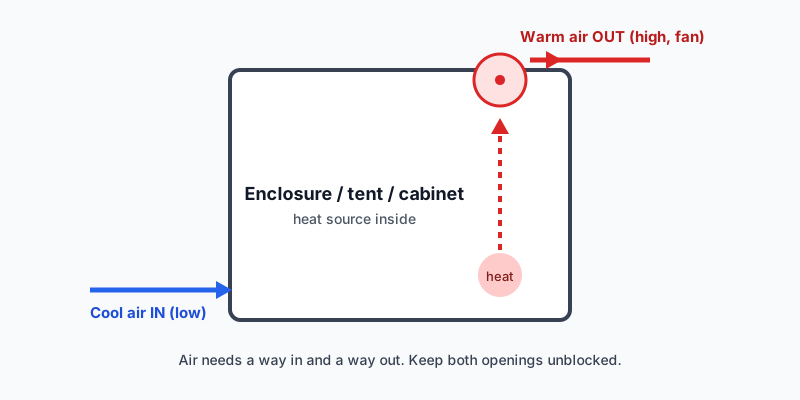
A tent is a closed box. Plants add moisture and heat shifts with the lights. A fan pulls air out (exhaust) while fresh air comes in through openings (intake). Without an exit and an entry, even a powerful fan cannot move much air.
Placement
- Mount the exhaust fan high, where warm and humid air collects.
- Leave low intake openings that are not blocked by the tent wall.
- Keep the fan guard on and cables out of reach of water and watering.
- Avoid blowing a strong stream directly onto delicate seedlings. Use a lower speed or a deflector.
Singapore humidity
Outdoor humidity in Singapore is already high, so incoming air is not dry. Good circulation helps reduce stagnant pockets, but you cannot rely on a fan alone to control humidity. Consider monitoring temperature and humidity with a simple meter and adjust fan speed accordingly.
Sizing
Tent fan sizing usually starts from tent volume and the number of air exchanges you want per minute, then allows for losses from filters or ducting. Any filter or duct reduces airflow noticeably, so a free-air fan rating overstates what you will get. The featured 250mm fan lists no airflow figure, so it is a better fit for open air movement than for pulling air through a dense carbon filter.
Why speed control helps
Being able to turn the fan down lets you balance noise, temperature and humidity without swapping hardware. See How a Speed Controller Helps a DC Cooling Fan.
Safety
Water and electricity do not mix. Keep power units off the floor, away from watering, and in a ventilated spot. Read How to Install a 250mm Cooling Fan Safely before mounting.